 English,
 Spanish,
 Polish


Free Consultation
630-932-9100

-

- Home
- Our Firm
- Practice Areas
- Divorce
- Alimony and Maintenance
- Child Support
- College Expenses
- Special Needs Children and Divorce
- Parental Responsibility / Custody
- Sole Custody vs. Joint Custody
- Parenting Plans and Visitation
- Child Relocation
- Property and Asset Division
- Retirement, 401k Accounts and Pensions
- Debt Division
- Post Decree Modifications
- Post Decree Enforcement and Contempt Hearings
- Dissolution of Arranged Marriages
- Tax Consequences and Divorce
- Uncontested Divorce
- Divorce Involving Mental Health Issues or Addictions
- Divorce and the Stay-at-Home Parent
- Divorce FAQs
- Family Law
- Personal Injury
- Motor Vehicle Accidents
- Auto Accidents
- Truck Accidents
- Amazon Delivery Driver Accidents
- Motorcycle Accidents
- Rideshare Accidents
- Pedestrian Accidents
- E-Bike/E-Scooter Accidents
- Boat Accidents
- Aviation Accidents
- Premises Liability
- Medical Malpractice
- Nursing Home Abuse
- Wrongful Death
- Construction Site Accidents
- Other Serious Injuries
- Personal Injury FAQs
- Workers' Compensation
- Construction Accidents and Injuries
- Warehouse and Factory Worker Injuries
- Healthcare Worker Injuries
- Office Worker Injuries
- Shipping and Trucker Worker Injuries
- Types of Workers' Compensation Injuries
- Back and Neck injuries
- Repetitive Stress Injuries
- Arm and Shoulder Injuries
- Knee Injuries
- Occupational Diseases
- Specific Accident Cases
- Who We Represent
- Workers' Comp Death Benefits
- Filing a Workers' Comp Claim
- How to Qualify for Benefits Under Workers' Comp
- Vocational Rehabilitation Rights
- Workers' Compensation FAQs
- Criminal Defense
- Immigration
- Bankruptcy
- Estate Planning
- Real Estate
- Divorce
- Success Stories
- Testimonials
- Media
- Blog
- Contact Us
What Is Involved in a U.S. Immigration Naturalization Ceremony?
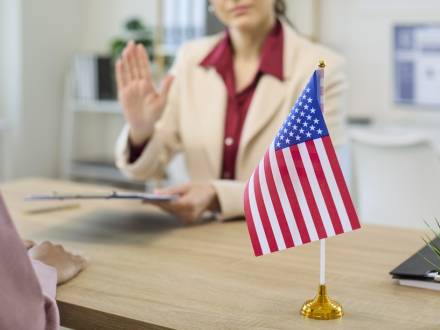
A naturalization ceremony is the final step in becoming a U.S. citizen. You check in, answer questions, take the Oath of Allegiance, and receive your Certificate of Naturalization. Once U.S. Citizenship and Immigration Services (USCIS) approves your application, you still need to take the oath to become a citizen. Some people qualify to skip the oath. If you are preparing for a ceremony in 2026, an Illinois immigration lawyer can help you understand what to expect.
When Will USCIS Schedule Your Naturalization Ceremony?
Some people take the oath on the same day as their citizenship interview. Others receive a ceremony date several weeks or months after approval. The timing depends on where you live and when ceremonies are available.
USCIS sends Form N-445, called the Notice of Naturalization Oath Ceremony. It tells you the date, time, and location. In Illinois, ceremonies take place at USCIS offices and federal courthouses, including locations in Chicago.
If you cannot attend, follow the instructions on your notice to request another date. Explain why you need to reschedule. Missing two ceremonies without a good reason can lead USCIS to reopen and possibly deny your application.
What Happens During a U.S. Naturalization Ceremony?
When you arrive, you check in with USCIS staff. They review your notice and collect your green card. You also answer questions about anything that has changed since your citizenship interview.
The questions can cover travel outside the United States, arrests, marriage, divorce, and other major changes. Answer honestly, even if you think a change is minor. If something has changed, USCIS can review the details before you take the oath.
During the ceremony, a judge or USCIS official leads the Oath of Allegiance. There may also be speeches or other parts of the program. After taking the oath, you receive your Certificate of Naturalization. Check your name, date of birth, and other information before leaving. Tell USCIS staff immediately if you find a mistake.
The time needed for the ceremony varies. Large ceremonies can take longer because of check-in and security procedures.
What Is the Oath of Allegiance for U.S. Citizenship?
The Oath of Allegiance is a promise to support the United States and its laws. Under 8 U.S.C. § 1448, applicants make several promises, including supporting the Constitution, giving up allegiance to foreign governments, and serving the country when required by law.
Most applicants take the oath by raising their right hand and repeating the words with others at the ceremony. Once you complete the oath, you officially become a U.S. citizen.
Some applicants can request changes to the oath because of qualifying religious beliefs about military service. People with certain disabilities can qualify to skip the oath if they cannot understand it or show that they understand it.
What Should You Bring to Your Naturalization Ceremony?
USCIS provides instructions about what to bring. Important items include:
- Form N-445: Your ceremony notice, with the questions completed as instructed
- Green card: Your Permanent Resident Card, which USCIS normally collects
- Travel documents: Any reentry permit or refugee travel document you have
- Photo identification: A driver's license, state ID, or another accepted ID
- Other paperwork: Any additional documents USCIS requests in your notice
Wear neat, respectful clothing and arrive early enough to pass through security. Check your notice for rules about guests, bags, and electronic devices. Some locations limit what visitors can bring inside.
What Should You Do After Becoming a U.S. Citizen?
After taking the oath, your Certificate of Naturalization becomes important proof of citizenship. Under 8 U.S.C. § 1449, new citizens are entitled to receive this certificate. Keep it somewhere safe and avoid laminating it.
You should also apply for a U.S. passport. A U.S. passport gives you another way to prove your citizenship. You need one to fly out of or back into the United States.
Make sure Social Security has your correct citizenship status. If you requested an update on Form N-400, USCIS can send the information to Social Security for you. Otherwise, you can request the update yourself.
You can also register to vote and explore options for helping eligible family members immigrate. U.S. citizens can sponsor certain relatives that green card holders cannot.
Schedule a Free Consultation With Our Illinois Immigration Attorney Today
Attorney Steven H. Mevorah has served immigrants throughout Northern Illinois for more than 40 years. He helps clients understand the citizenship process and address problems that could delay their applications. Our firm can explain what to expect at your ceremony and help you prepare for the final step.
If your naturalization ceremony is scheduled for 2026 and you have questions about your eligibility, contact Mevorah & Giglio Law Offices at 630-932-9100 to talk to our Illinois immigration lawyer today.





Offices in 3 Convenient DuPage County Locations
Lombard
900 E. Roosevelt Road
Lombard, IL 60148
Phone: 630-932-9100
Fax: 630-932-9868
MAP & DIRECTIONS
Bloomingdale
134 N. Bloomingdale Road
Bloomingdale, IL 60108
Phone: 630-529-2400
Fax: 630-529-7630
MAP & DIRECTIONS
Naperville
Phone: 630-420-1000
By Appointment Only

 Make a Payment


